
Grown-ups' guide to Mymiks
Written by Marte, a specialist in clinical psychology.
Mymiks (pronounced "mimmix", [ˈmɪmɪks]) is first and foremost a plush toy. Your child names it, takes it to bed and brings it along in play, the way children always have. The app comes on top of that: it is home to the Mymik, a little character that talks with the help of artificial intelligence (AI).
The name plays on the word mimic, which means to imitate. That is exactly what AI does: it imitates the way people talk, without being a person.
We made Mymiks because we ourselves face a dilemma as parents. We worry that AI will make children passive, that they use it as a shortcut and don't learn what they should, and that they get a machine instead of a friend. At the same time, we know that children will meet AI everywhere: at school, at work and in everyday life. A child who has never tried AI, or has only met it where no grown-up is watching, is easier to fool.
We believe there is a third way: children and grown-ups learning together what AI is and isn't, without it taking over play and friendships. The goal is AI resilience. The child should know what an AI can and can't do, use it wisely, and know that people are who you turn to when something matters.
You don't need to know anything about AI. The most important thing you do is to be there, be curious and ask!
What the Mymik is, and what it isn't
Five things are useful to know, both for you and for your child:
- The AI feels nothing. When the Mymik says it's hungry, it's because the app writes the word "hungry" in front of what your child says. There is no stomach. A hug for the plush never reaches it.
- The AI guesses. It doesn't think. It works out which word fits best after the previous one. That's why an answer can sound completely sure and still be wrong.
- The AI is no better than its examples. It has learned from text people have written. If the examples are one-sided, so are the answers.
- The AI is not neutral. It was made by people (including us), and our opinions and prejudices come along with it.
- The AI can sound like a person without being one. There is nobody behind the words, and nobody "on the other side".
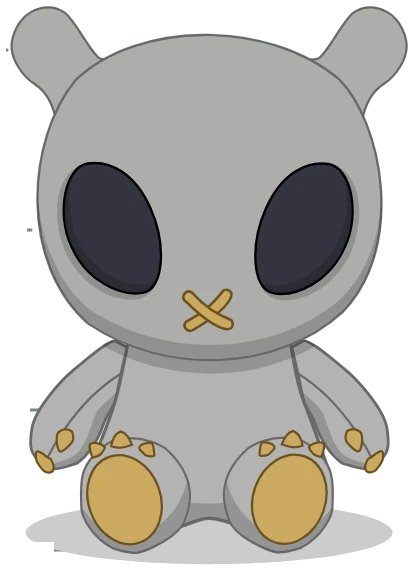
The plush
Brought to life by the child.
- Namegiven by the child
- Batterynot needed
- Stuffingcuddles and imagination
- Pocket on the backa cool coin with a QR code on the lid
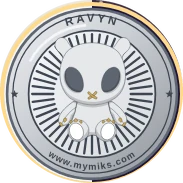 the coin connects them
The Mymik
Gets its words from a machine.
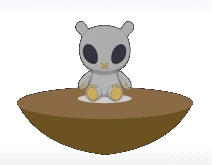
- Language modelguesses words
- Moodvaries
- Memorypatchy, may embellish
- The Mymika character in a game
How the AI guesses
It doesn't think. It works out which word fits best after the previous one.
I am …- hungry58 %
- happy22 %
- tired12 %
- sad7 %
- a banana1 %
The numbers are only a simplified example. A real AI can choose from thousands of possibilities.
Nobody has fed the Mymik today. The language model has been trained so that if nobody has fed it, it should be hungry. So it picks the word "hungry" over the other options.
There is no stomach. The AI feels nothing.
That's why an answer can sound completely sure and still be wrong. The most common word isn't always the right one.


Ravyn, Shado and Zen guess the same way.
How we made Mymiks
We built Mymiks so that it helps the child tell play apart from the machine. These are the choices we made:
- The plush and the machine are two things. The plush is the child's playmate, just as before. The AI is a visible machine that comes along. They should be clearly distinguishable from each other.
- Mistakes and resistance belong. Mymiks is made to be far from perfect, and it doesn't always do as it's told. A little resistance makes it more fun to explore. The mistakes are there to train the child in critical thinking, and they make the AI less all-knowing and less human.
- Made to be put down. The app has no notifications, no "loot boxes" and no subscription. The answers are short, and conversations come to natural ends.
- A grown-up belongs. This guide, the conversation starters and the activities are there so that AI becomes something you talk about at home.
Safety and privacy
Conversations don't leave your child's device, and the AI is trained to refer to a grown-up when a conversation turns to serious topics.
- The AI runs on the phone. Conversations don't go through us or through an AI in a cloud.
- The AI is not a confidant. If your child talks about something dangerous or unpleasant, about bullying, fighting or bad ideas, the AI encourages the child to talk to a grown-up.
- But no AI is flawless. The app can misunderstand or miss something. It never replaces a grown-up who is paying attention.
Conversations with the Mymik are not recommended before the age of 8.
Ground rules for grown-ups
A few simple ground rules:
- Use the app together at first. Sit next to your child the first few times, and talk about what you see.
- Let the plush live without a screen. Most play needs no app. The greatest value may come when the child brings the plush to life in the good old-fashioned way.
- Use the app where people are. Use it in the living room or the kitchen, not alone in the bedroom. Make it easy to keep an eye on things.
- Hard things are told to people. Talk with your child about how comfort, secrets and things that hurt belong with people.
- Think for yourself first. Try to work out the answer together before you ask the machine. A little struggle is not wasted time.
- Be a role model. Children see how you talk to and about AI. Feel free to say out loud when you wonder whether a machine is right.
Conversation starters
We have made some conversation cards for you. Pick one or two questions at a time, when it comes up naturally. There are no right answers – the most important thing is that you wonder together.
What does the name mean?
Focus: the Mymik imitates. It sounds like a person without being one.
- Do you know what the word mimic means? (It means to imitate, to copy.)
- Why do you think the Mymik got a name that sounds like mimic?
- What is the Mymik copying? Is copying the same as being real?
- A parrot can say "I love you". Does the parrot know what it's saying?
Can the Mymik feel?
Focus: the Mymik has no body and no senses, only numbers from the microphone.
- Where do you think the Mymik feels hungry? Does it have a stomach?
- Who decides that it's hungry, the Mymik itself or the app?
- Does the app know what chocolate tastes like? Then how can it describe it?
- The phone has a microphone and a camera. Is that the same as having ears and eyes?
How does it know?
Focus: the Mymik guesses instead of thinking, and can be wrong. You have to know something yourself to notice.
- How do you think the app knows the answer?
- Can it be wrong? Shall we see if we can find a mistake? How did you know it was wrong?
- What do you think the app knows nothing about?
- When you hear "Once upon a time …", what comes next? Is that how the Mymik guesses?
- If you don't know anything about dinosaurs, how can you tell whether the Mymik says something right about them?
Who made it?
Focus: people made the Mymik and decided what it can do, how it learned and what it wants you to do.
- Who do you think made the Mymik? Why do you think they made it?
- What do they want you to do with it?
- Where do you think the Mymik learned all its words?
- Do you think the Mymik thinks the same as the people who made it?
- The Mymik sends no notifications to get you back. Why do you think that is? Do other apps do that?
Does it have feelings?
Focus: it's the child who gives the Mymik feelings, the way the child gives the teddy feelings in play.
- Can the Mymik get sad?
- Does the app get sad when you turn it off?
- Does it miss you when you're at school?
- What's the difference between saying "I love you" and meaning it?
- Who decides that your teddy is sad? Who decides it for the Mymik?
People and machines
Focus: what only people can do: be friends, comfort and learn by struggling.
- What can your best friend do that the app can't?
- Who do you talk to when you're sad?
- What is something only people can do?
- Is a riddle fun if someone tells you the answer straight away?
When the Mymik says something nice about you
Focus: the Mymik is made to be friendly and agreeable. Kind words from a machine are not the same as from grandma.
- Was it nice to hear? Why do you think it said that?
- What's the difference between the Mymik saying it loves you, and grandma saying it?
- Does the Mymik always say you're right? Why do you think that is?
When the Mymik is ill or has died
Focus: it's fine to be sad. Something that has never lived can't die, and comfort is found with people.
- How did that feel?
- Can something that has never lived die? What really happens inside the phone then?
- What can we do next time?
When should you pay attention?
It's completely normal for children to think their plush toys are alive. This is how a child practises understanding that others have an inner life, and it shouldn't be corrected harshly.
If your child struggles to tell the plush from the Mymik in the app, curious questions work better than explanations: "What do you think happens inside the phone when it answers?"
It's also normal to be sad if the Mymik dies. Take it seriously, as you would when a child is sad that something else is gone. It's a good opportunity to talk about what is alive and what isn't.
Some signs are still worth noticing:
- Your child would rather use the app than play with other children.
- Your child becomes very restless or angry when not allowed to use the app.
- Your child tells the app things they don't tell any grown-up.
- Your child seems convinced that the app loves them or needs them.
If you see signs like these, you can:
- Talk to your child in a calm and curious tone, without scolding.
- Use the app together for a while, and give the teddy more room without a screen.
- Be extra available yourself. Children need to feel that grown-ups are there when something is hard.
- Contact the school nurse or your GP if you are worried about how your child is doing more generally.
If you have questions for us, write to [email protected]. We answer ourselves.
How the app works
Your child will figure out most of it. This is what's good for you to know.
How to get started
Four steps. Your child will figure out most of it.
-
1
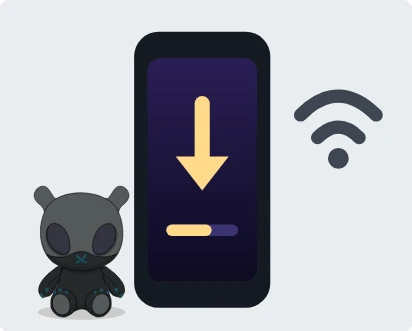
Download the app
Free, for iPhone and Android. The first time, it fetches the AI, about 3 GB. Use Wi-Fi.
-
2
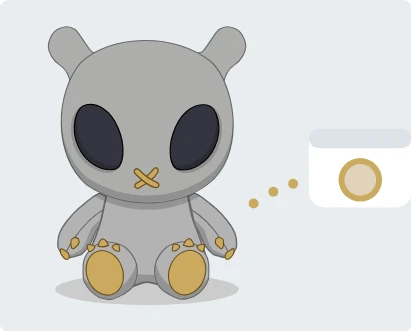
Open the pocket on the back
The pocket is on the back. The QR code is inside the lid of the little box.
-
3
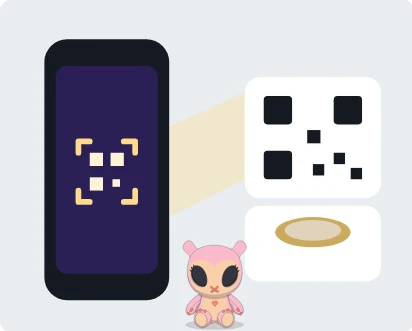
Scan the code in the app
Tap the QR button in the top right, and hold the code in front of the camera.
-
4
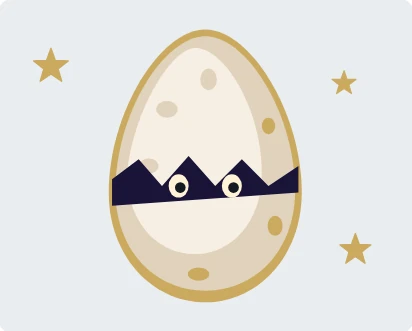
The Mymik hatches
Give it a name and choose a language. Play with the coin, it's cool! But keep the code on the lid safe. You'll need it if you change phones or want to start over.
The app is free, for iPhone and Android. The first time, it downloads the AI and the voice, a few gigabytes, so do it on Wi-Fi. The AI needs a phone with plenty of memory. Which phones work is listed in the app manual.
In the pocket on the back there's a box with a coin and a QR code. You scan the code inside the app, and the Mymik hatches. The coin is fun to play with, but keep the box with the code safe. You'll need it if you change phones. If you scan the code on a new phone, the Mymik moves there. If you want to start the game over, you also scan the code again.
The Mymik gets hungry, bored and ill if nobody looks after it. Your child can feed it, give it medicine and play with it, but only a couple of times a day. Then the food runs out until tomorrow.
It can die. If the Mymik is forgotten for several days, it gets ill, and in the end it can die. That doesn't happen over a weekend. We made it slow on purpose, because a child should be able to put the app down without being punished. If the Mymik dies anyway, there are several ways back: if it meets the same friend three days in a row, the spark of life returns. If you scan the code again, you start the game over.
The Mymik's life
It gets hungry and ill if nobody looks after it.
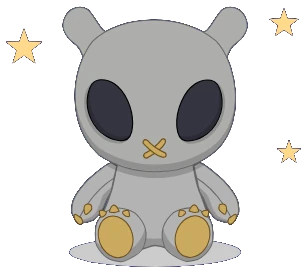
Content
fed and played with
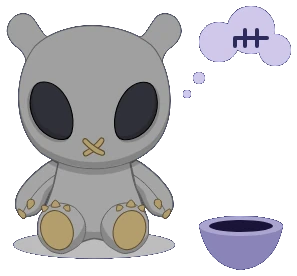
Hungry and bored
nobody has checked on it
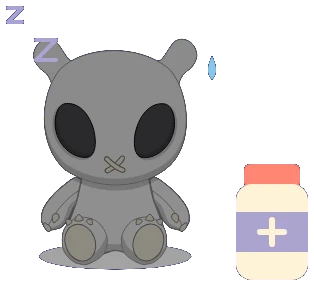
Ill
forgotten for several days
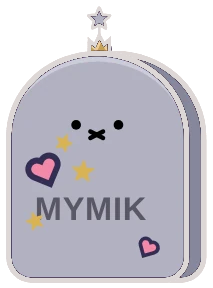
Dead
doesn't happen over a weekend
Meet the same friend 3 days in a row
Then the spark of life returns, and the Mymik lives on.
 Day 1
- Day 2
- Day 3

Start over
Scan the QR code again. A new egg hatches, and the new Mymik remembers nothing from before.
While your child is away, the Mymik finds little things that end up in a chest. Your child can place them on the island or give them away when meeting a friend. A gift is given away for real: it disappears from the chest and ends up with the friend. Your child can also choose not to give anything away.
In the evening, the Mymik can tell the story of your day. It builds the story from what has happened in the app, and it can also remember things wrongly or embellish them.
Meeting friends: when two children, each with their own Mymik, stand next to each other, the phones can find each other over Bluetooth. The Mymiks say hello, can give each other gifts, and have a little conversation between themselves.
If the Mymik says something odd or not okay, you can tap "Report this answer". You see exactly what will be sent to us before you send it: the answer, the conversation just before it, and which model and language it concerned. We receive the reports and use them to make the AI better.
Removing a Mymik: hold your finger on the Mymik in the list to remove it. Everything it remembers is deleted from the phone. The plush works as before, but if you scan the code again, a completely new Mymik arrives that doesn't remember the old one.